SLOrk is back tomorrow night at Stanford Campus. We will be giving the last concert of this quarter at the Dinkelspiel Auditorium, Wednesday, June 2nd at 8pm. Free!
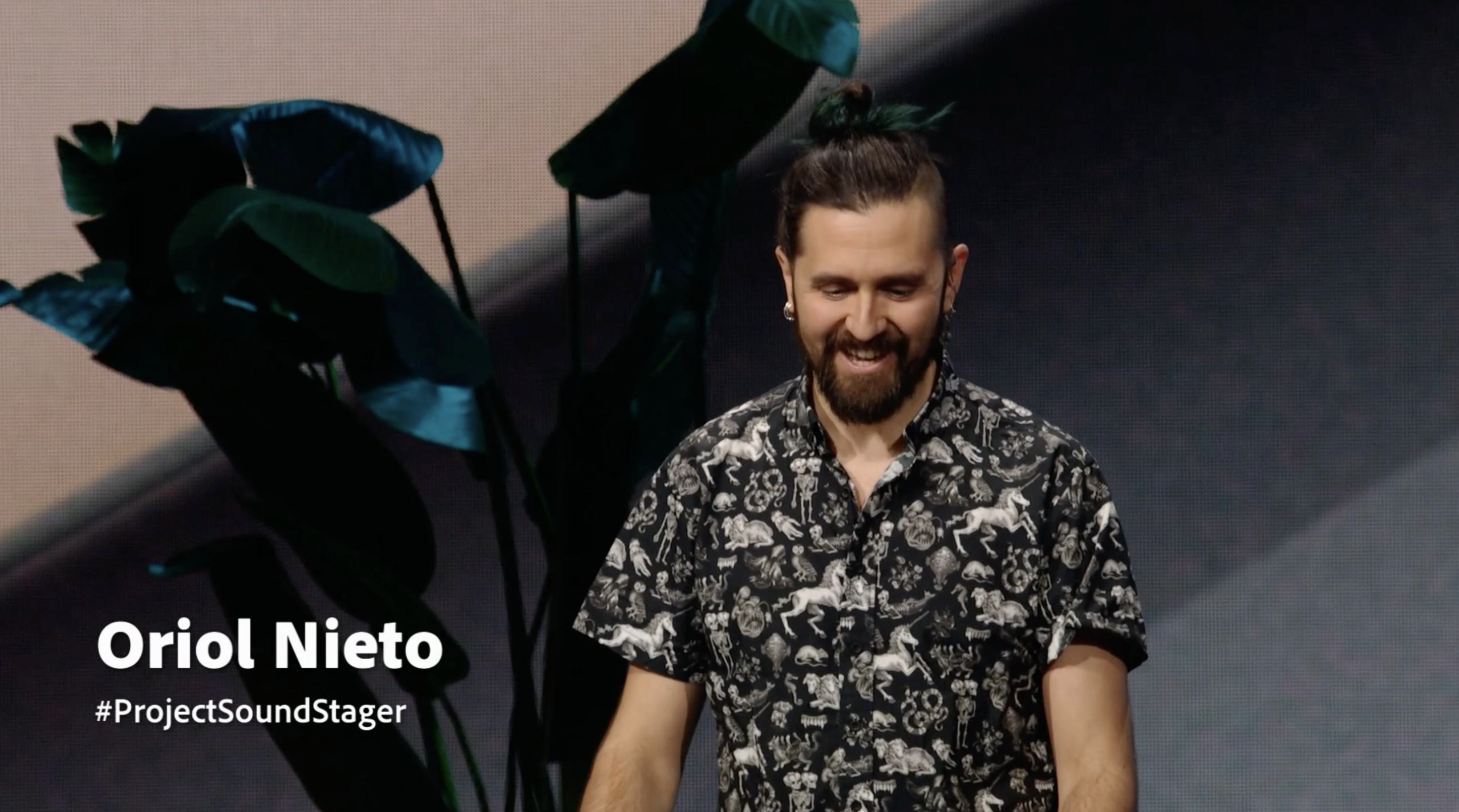
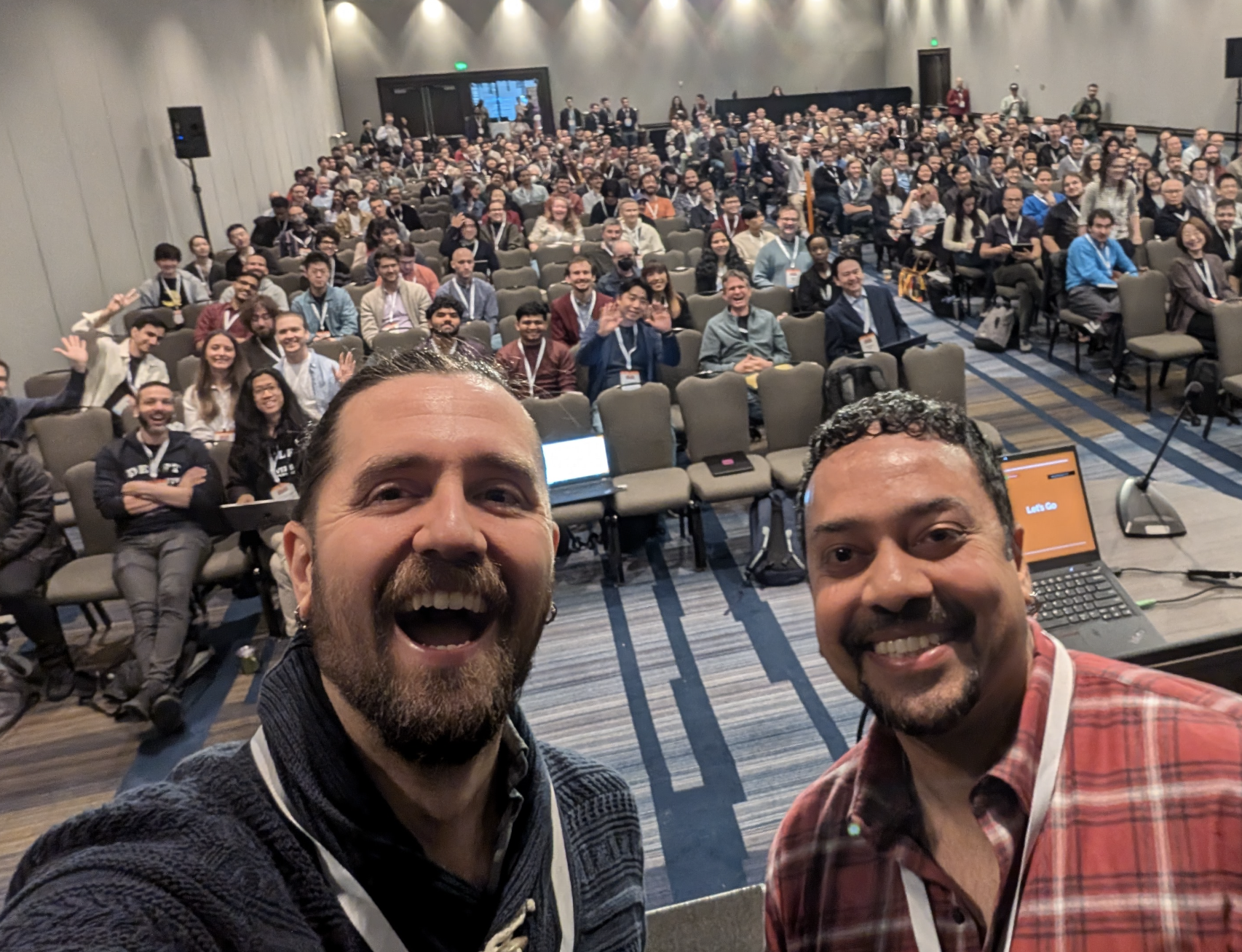
Last week Jordan Rudess was invited to come to Stanford to give a performance with me as part of the Stanford Laptop Orchestra (SLOrk). He also took this chance to perform in LA and in San Francisco. I went with him to SF and presented my ReactPad and also jammed with him. We also visited different companies like Muse, Sonoma and Apple. It was a very intense week, but the effort was totally worth it. Jordan is an amazing musician, a passionate for the music technology, and an awesome person.
The SLOrk concert was a lot of fun, and everything went fine even though all of us -even Jordan!- were nervous about the performance. We have plenty of videos of that, but we’re still editing them, I will upload them as soon as possible. For now, here there are some pictures of the week. Thanks Ge for letting me putting this together, thanks Adam Sheppard and Xiang Zhang for help me out getting the funding for bringing Jordan, and of course thanks to Jordan for coming all the way from the East Coast to give such a wonderful performance.
That’s right: Jordan Rudess is coming to Stanford to give a free performance next Thursday April 29th! This event is part of the SLORkastic Chamber Music 2010, a free concert by the whole class of Composing, Coding, and Performance with Laptop Orchestra. This concert is divided into 7 groups, and Jordan Rudess will be joining my group as a very special guest.
I will be sharing the stage with Jordan Rudess and Jorge Herrera (a PhD student at CCRMA that is helping me with the ReactPad pieces). Jordan will play the Eigenharp, the iPad, the iPhone and of course his keyboards. Jorge and I will play the iPad version of the ReactPad, and I might use Jordan’s voice synthesizer as well.
I still can’t believe that I managed to bring Jordan from the east coast and that I will be sharing the stage with him. I’m really excited about this!
Finally the ReactPad is here! I have been working hard on this project for the iPhone Music course at Stanford, and finally today a first beta is released. I was inpired by the ReacTable from the MTG, and I added more features like a voice input, gravity, load/save patches, …
I have been working on a couple of songs for the Advanced Sound Recording Technology course at CCRMA. I am quite happy with the result, I definitively think the CCRMA Studio is a great place to record some music. I recorded these new songs with Roy Fejgin, another MST Student.
I finally learned quite a bit of Pro Tools HD, recording, mics placement, mixing, and even mastering. I decided that next quarter I will record a bunch more songs. I can’t wait to “live” in the studio for the next couple of months.
I have been blown away with this fascinating visual/audio illusion. Watch the following video and listen carefully on what he’s saying.
Now close your eyes and play the video again. Do you hear the same thing?
Most people will hear “Da-da, da-da” (or “ga-ga, ga-ga”) when watching the video with the eyes open, but then will hear “Ba-ba, ba-ba” when they close their eyes. In this video, the audio and the image do not relate, however our brain tries to make them relate somehow. What we are actually hearing is “Ba-ba, ba-ba”, but what we’re seeing is a man saying “Ga-ga, ga-ga”. So our brain is trying to find a middle point and we hear “Da-da, da-da” (or “ga-ga, ga-ga”).
This is known as the McGurk Effect, and you can read the original paper written by Harry McGurk & John MacDonald in 1976 here.
I’ve been working on this application for the iPhone called Sonic Skull Shot (SSS) for the past week as an assignment for the course Mobile Music, taught by Professor Ge Wang.
It is a nice OpenGL application for the iPhone that makes use of the accelerometer and some touches to create a sling shot to throw skulls while synthezising some sound. It took me so many hours to do that, but in the end I think the result is pretty good.
This quarter I signed up for the course Mobile Music, taught by Professor Ge Wang. It is a course to write music code for Mobile devices, mostly focused on the iPhone.
Yesterday was due the first assignment which was writing three small music apps for the iPhone. I must say that the library created initially for Smule and later modified for the MoPho (Stanford Mobile Phone Orchestra) is extremely amazing.
With this great title (A Computer Scientist’s View of Life, the Universe, and Everything), Jürgen Schmidhuber presents a fascinating scientific paper that tries to find an answer to the question “Is the universe computable?”
The Great Programmer does not worry about computation time. Nobody presses Him. Creatures which evolve in any of the universes don’t have to worry either. They run on local time and have no idea of how many instructions it takes the Big Computer to compute one of their time steps, or how many instructions it spends on all the other creatures in parallel universes.
Possible limitations of the Great Programmer. He does not need not be very smart. For instance, in some of His universes phenomena will appear that humans would call life. The Great Programmer won’t have to be able to recognize them.
The Great Programmer reappears. Several of the Great Programmer’s universes will feature another Great Programmer who programs another Big Computer to run all possible universes. Obviously, there are infinite chains of Great Programmers. If our own universe allowed for enough storage, enough time, and fault-free computing, then you could be one of them.
More than 2000 years of European philosophy dealt with the distinction between body and soul. The Great Programmer does not care. The processes that correspond to our brain firing patterns and the sound waves they provoke during discussions about body and soul correspond to computable substrings of our universe’s evolution. Bitstrings representing such talk may evolve in many universes. For instance, sound wave patterns representing no- tions such as body and soul and “consciousness” may be useful in everyday lan- guage of certain inhabitants of those universes. From the view of the Great Pro- grammer, though, such bitstring subpatterns may be entirely irrelevant. There is no need for Him to load them with “meaning”.
Conclusion. By stepping back and adopting the Great Programmer’s point of view, classic problems of philosophy go away.
I really enjoyed reading all of this. However, it’s sad to my religion beliefs not to have found anything related to a Flying Spaghetti Monster on this paper.